
Development
Some ancient microbes frozen with Ötzi the Iceman are still growing
June 6, 2026 Development Source: Ars Technica
Share this article



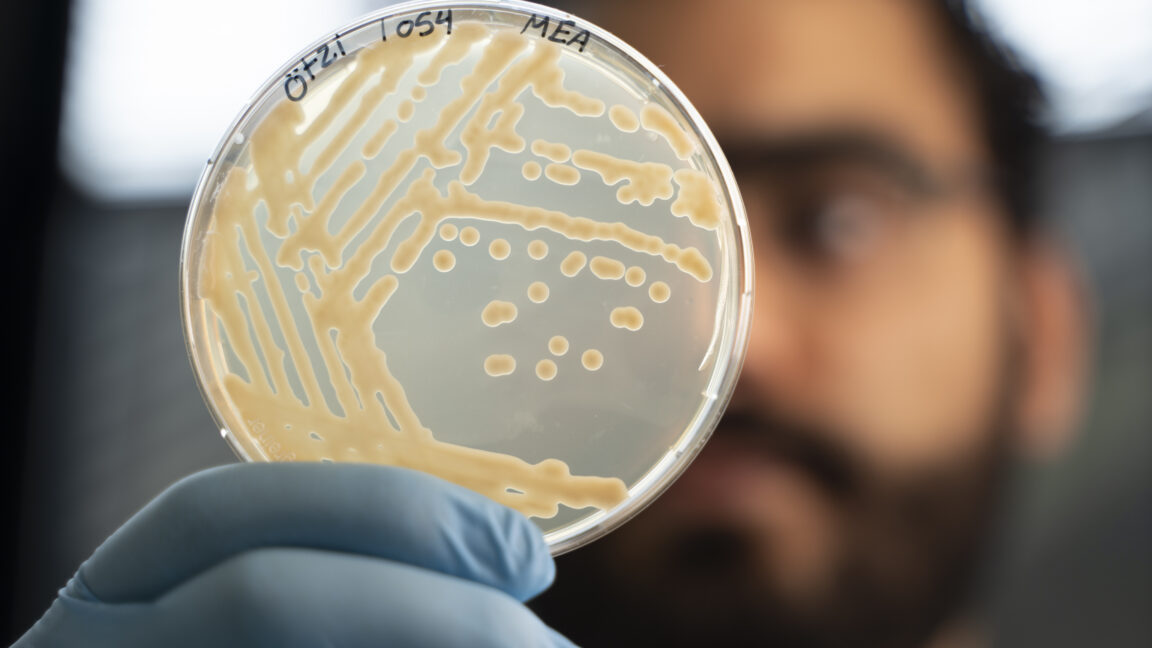
Yeasts like Glaciozyma have been found in small depressions in the glacial ice not far from where Ötzi’s body lay, so it makes sense that they’d have been among the microorganisms drawn to a fresh food source in the form of a dead Copper Age mountaineer. Or, as Sarhan and his colleagues put it, “potential postmortem infiltration through the mummy’s natural openings.” It’s the circle of life.
They’re even still evolving; the bacteria from Ötzi’s body have some small but noticeable genetic differences from the bacteria in the soil where he died, although they’re clearly related. It looks as if Pseudomonas colonized Ötzi’s body once and then, as Sarhan and his colleagues put it, “this specific strain may have adapted to the unique conditions of the conservation facility or the mummy’s tissues themselves.”
Meanwhile, in swabs from the mummy’s skin, Sarhan and his colleagues found bacteria like Methylobaderium and Sphingomonas, both known for being resilient in tough environments and for forming biofilms. Those species are currently a huge part of the microbiome on Ötzi’s skin, but not inside his body. Sarhan and his colleagues say they’re probably there thanks to the constant spray of UV-treated water that maintains the humidity in the conservation chamber.
“These taxa… have effectively reshaped the mummy’s external microbiome,” wrote Sarhan and his colleagues.
Elisabeth Vallazza, the Director of the South Tyrol Museum of Archaeology that houses Ötzi, said in a press release that Ötzi is stable and he’s carefully monitored, adding that “further research and full conservation efforts are certainly needed to preserve it for many more generations.”
We can think of Ötzi’s microbiome in three parts: the microbes that lived in and on his body while he was running for his life through the Alps (like Rombousta hominsis and Clostridium moniliforme), the ones that moved in after his death (like Pseudomonas and the yeasts—which is also a great band name), and the ones that came from the environment he now rests in (like Methylobacterium). Five thousand years after his death, Ötzi’s body is still a whole ecosystem, built on the ruins of the one that once inhabited his body along with him.
“The Iceman is not a static relic, but a dynamic biological interface,” wrote Sarhan and his colleagues. And that’s the great truth of existence: life’s short, then you die—and the whole time, you’re a dynamic biological interface.
Microbiome, 2026. DOI: 10.1186/s40168-026-02417-6 (About DOIs).