
Development
How long will it take to rebuild Blue Origin's launch pad? We asked some SpaceX vets.
June 3, 2026 Development Source: Ars Technica
Share this article



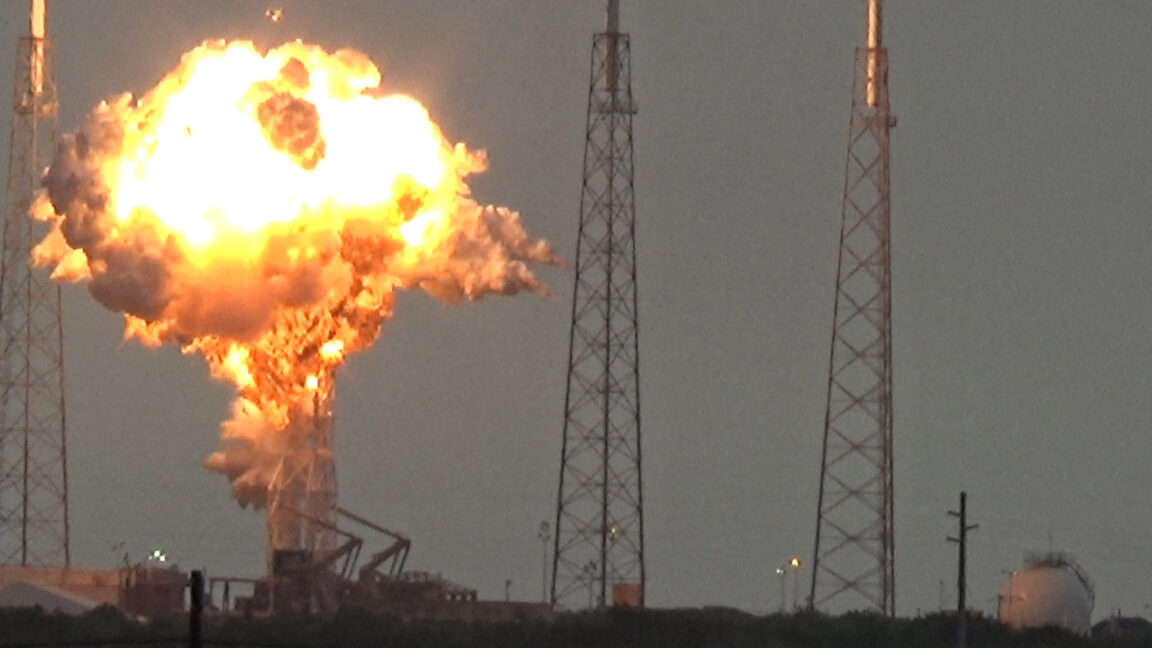
Koenigsmann was SpaceX’s vice president of build and flight reliability at the time, and his team faced the challenge of identifying the failure in the upper stage of the Falcon 9 rocket that caused it to explode during a relatively benign part of the fueling process.
This involved a weekslong search of the wetlands surrounding the launch site at Cape Canaveral for pieces of the booster. The idea was that the components farthest from the pad were nearest the most energetic part of the explosion. Ultimately, the investigative team narrowed in on the complex failure of the lining of a pressure vessel in the upper stage.
For its investigation, Koenigsmann urges Blue Origin to be as transparent as possible with NASA and the Federal Aviation Administration and to study and take apart the physical evidence as soon as possible to identify the causes of failure. Every anomaly, he cautioned, is different.
Blue Origin has not publicly discussed the cause of the New Glenn failure, but speculation has focused on a possible anomaly in one of the seven main BE-4 engines. The Falcon 9 investigation was the primary obstacle to SpaceX returning to flight, but launch pad availability will be the bigger hurdle for Blue Origin.
After the AMOS-6 failure, SpaceX was also without an active launch pad for the Falcon 9 rocket. Nearest to readiness was an existing pad at Vandenberg Air Force Base in California, which was undergoing upgrades to support the “Full Thrust” variant of the Falcon 9 rocket, which used densified propellant. This is where the Falcon 9 returned to flight, less than five months later, in January 2017.
SpaceX then focused on completing modifications to Launch Complex 39A at Kennedy Space Center, which it had leased from NASA. The Falcon 9 rocket launched from here in February 2017.
The closest analog to what Blue Origin is attempting to do, therefore, concerns the rebuild of Space Launch Complex-40, which was largely destroyed by the AMOS-6 failure.
But launch sites are about much more than concrete and steel. There is an incredible amount of electrical wiring that almost certainly got fried by the fireball. And then there is the intricate tubing that provides gas and liquids to fill not just the rocket’s propellant tanks but also smaller pressurized vessels throughout the vehicle for various purposes.
“I’m worried about the tubing,” Harriss said, noting that every launch site has bespoke plumbing and electrical elements, with lots of tasks that must be done by hand; pulling and splicing wire, delicate welding, and so much more. “It takes a lot of time and effort to put that into place.”
When it began rebuilding SLC-40, SpaceX had some advantages, Muratore said. The company had great teams coming from its pads at Kennedy Space Center and Vandenberg—not just the engineers, but also welders and other laborers who work directly on the infrastructure. This allowed SpaceX—a company already known for moving rapidly—to power through the SLC-40 rebuild.
Still, it took a while, with the first Falcon 9 rocket not launching from a rebuilt SLC-40 pad until December 2017. Including site remediation, SpaceX went from the AMOS-6 failure to a new launch in 15.5 months. The actual construction part, following remediation and design, required 11 months.
On Monday night, Blue Origin’s chief executive, Dave Limp, said the company would launch from its damaged pad before the end of this year, less than seven months from now.
None of the former SpaceX employees I spoke with for this article—some on the record, some off—believe this timeline is realistic. Twelve months was generally viewed as the best-case scenario. Eighteen months was seen as most likely.