
Development
Environmentalists turn out in force to oppose Trump coal ash rollbacks
May 30, 2026 Development Source: Ars Technica
Share this article



At Thursday’s virtual public comment session, required by law, a spokesman for the American Coal Ash Association lauded the Trump rollbacks as the right move forward.
John Ward, whose trade group focuses on advancing the management of materials made from coal ash, said the association is in support of the EPA’s move to eliminate criteria defining “beneficial use” for coal ash. He called coal ash an underutilized domestic mineral resource. Coal ash can be useful in the production of cement, wallboard, agriculture, and potentially critical minerals, he said.
Coal ash can improve concrete strength and durability, while supporting the supply chain for critical construction materials, said Leah Pilconis, vice president of government affairs and general counsel at the American Cement Association.
That trade group also supports the EPA’s proposed provision changes. Among them: redefining coal ash for cement manufacturing not as an industrial waste but instead as a part of the cement production process. The proposed changes come as supply of coal ash declines, Pilconis said, and could improve access to legacy coal combustion residue.
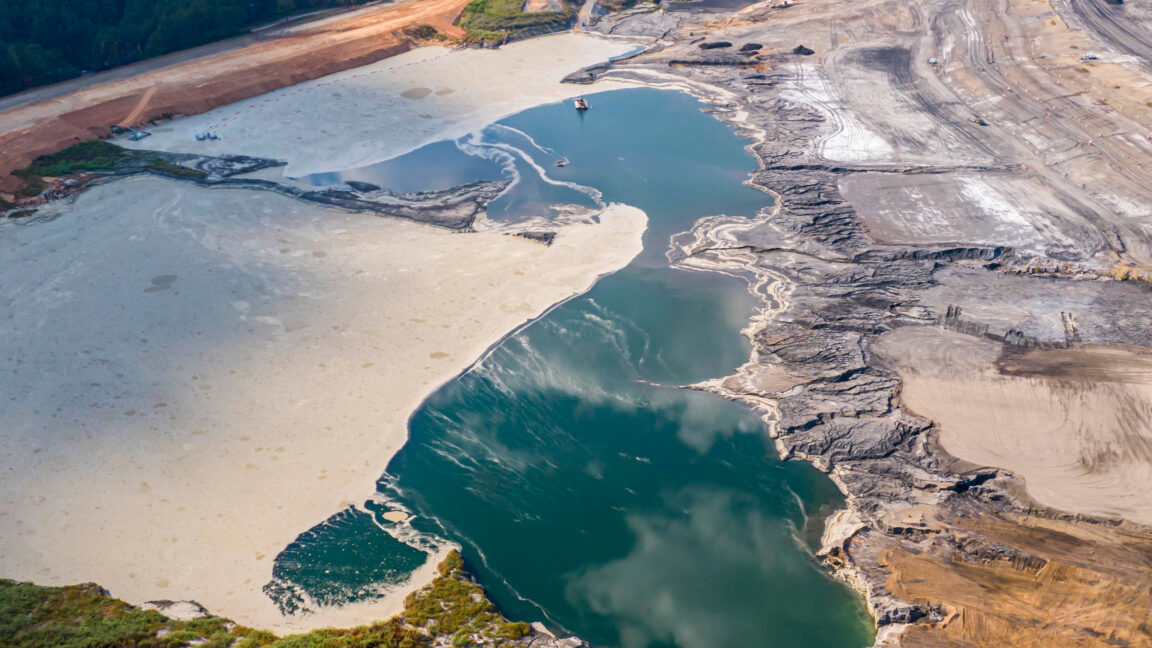
But beyond the coal ash used to make cement and other materials, vast quantities of the toxic residue are kept on-site at both active and retired coal plants, where it’s often covered with water or soil to prevent it from contaminating the air or waterways. The EPA has long had concerns about these sites: In 2002, the agency reported that improper lining on these coal ash ponds and landfills allow toxins to leach into the groundwater.
That threatened nearby water supplies, the agency found, by contaminating groundwaters above federal safety standards.
In their comments on Thursday, environmental groups said the EPA’s proposed rule guts protections against the dangers of burning coal and puts the nation’s groundwater at risk. Existing rules were built upon years of science, litigation, and documented harm, they said.
Cassel has been working on protecting communities from coal ash pollution for 15 years and said rain and hurricanes amplified by climate change have exacerbated these threats. And those who live near coal ash dumps, she said, continue to discover cancer at a rate that makes them think, “This cannot be normal.”
“EPA, you know the record,” Cassel said. “You made the record.”
Kristina Zierold, a professor at the University of Mississippi, said she has found that children exposed to coal ash are more likely to suffer from depression and have poorer school performance than children who aren’t exposed.
Zierold said she has been researching the health impacts of coal ash on children since 2011 and was awarded a National Institutes of Health grant in 2015 to investigate coal ash and neurobiological health in children 6 to 14 years old.
She and her research team utilized air pollution and dust sampling in the homes of children to collect coal ash and tested children for neurobehavioral and mental health conditions in multiple ways.
If a child performs poorly in school, that can have cascading effects through adulthood, Zierold said. Depression in children can lead to poor social interaction, lack of learning, and in some cases suicide, she said.
“Do you want your children playing on coal ash in parks and playgrounds?” Zierold asked. “Do you want them breathing it in and ingesting it? I don’t.”
Brianna Knisley, the director of public power campaigns at Appalachian Voices, said the 2008 Kingston Fossil Plant coal ash spill was one of the worst industrial disasters in US history. It’s an example of what happens when the EPA leaves coal ash management up to state regulators and utilities, she said.
The 900 workers who cleaned up the spill were denied protective gear and told the coal ash they were working to remove was clean enough to eat. Hundreds of workers became sick and dozens are dead, Knisley said.