
Development
Severed sea cucumber appendages don't seem to die
May 29, 2026 Development Source: Ars Technica
Share this article



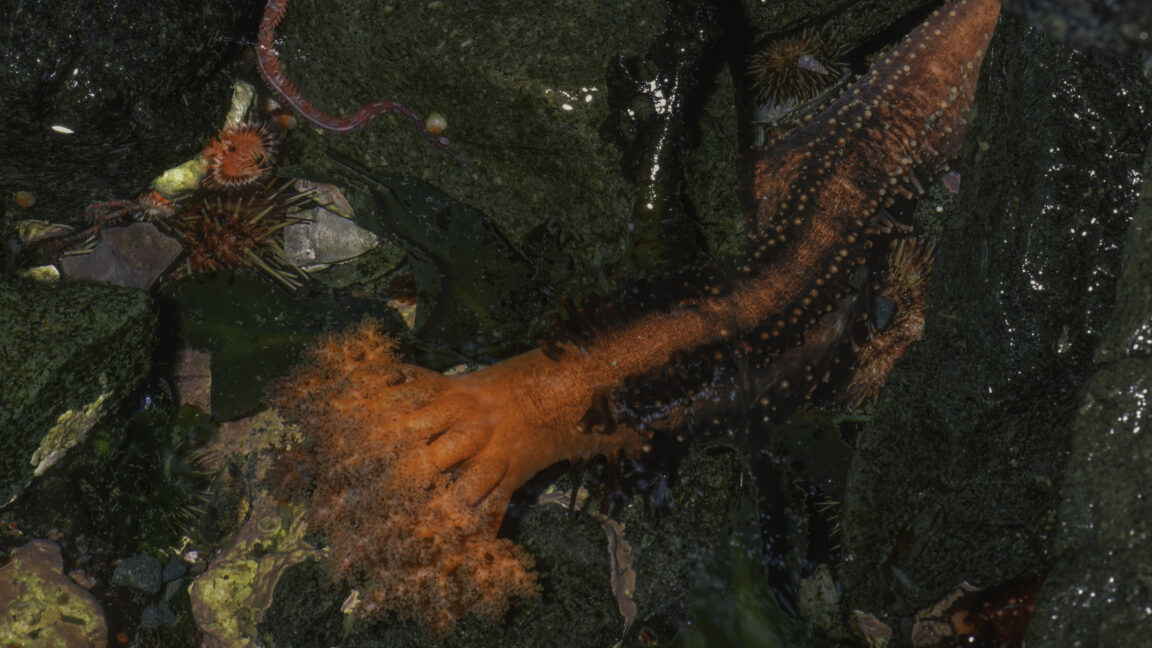
This fortuitous discovery quickly turned into an organized long-term experiment. The researchers took excised tube feet, groups of tube feet called ambulacra, and tentacles from P. fabricii and found all of them survived when placed in natural, non-sterile seawater.
“We examined all of them, but we primarily focused on tube feet,” Jobson said. When tube feet were severed, the wound margin was a mess of missing or fragmented epidermal and connective tissue. Within two days, the explants began shedding this damaged tissue. Internally, a large influx of coelomocytes, the sea cucumber’s immune cells, rushed from the inner connective tissues toward the damaged spot, apparently to facilitate organismal defense and regeneration.
By day six, the healthy tissue had curled inward, completely sealing the wound site; the severed organ was more or less restored to working order.
It turned out LiPfe explants weren’t just surviving; they were actively reorganizing their architecture to adapt to the new, severed state. First came the shrinking. During the first week, the tissue shrank by about 23 percent in diameter. Given more time, it stabilized and reversed this trend. Between 60 and 120 days post-excision, LiPfe grew back to their initial size, and after a year, they were 12 percent larger than when they were first cut from the host.
The researchers have introduced these tissues as a completely new class of living material they called LiPfe—living immortal P. fabricii explants. And as time went by, LiPfe put on quite a show.
The internals of a foot tube attached to a sea cucumber include a mix of epidermal tissue, connective tissue, a neural plexus, muscle tissue, and an inner lumen. The separated explants, though, got busy dismantling parts of themselves that were no longer useful. Muscle tissues, which initially made up 17 percent of the explant, were gradually invaded by coelomocytes that broke the muscle down into small pieces and destroyed its organization. After 180 days, the muscle tissue and the lumen had completely disappeared from the explant.
The team also found that the immortality of severed tissues is, to the best of our knowledge, unique to P. fabricii. The researchers conducted comparative experiments on explanted tissues from related sea cucumber species, and none showed equivalent tissue survival.
Back in 1951, doctors at Johns Hopkins Hospital in Baltimore took a sample of a malignant cervical tumor from Henrietta Lacks, a 31-year-old mother of five. When they cultured these cells later, they noticed that they doubled every 24 hours in a seemingly never-ending cycle. The HeLa cells, named after the patient, were the first instance of cell immortality ever discovered in humans. “This revolutionized cell biology and a lot of medical research,” Jobson says.
HeLa, though, was just a single cell type. LiPfe offers a new experimental model that enables scientists to work with a structured piece of animal tissue that maintains its own immune activity, cell cycling, and nutrient intake, without ethical concerns that come with experimenting on live animals. “On the evolutionary tree, sea cucumbers are relatively close to mammals, and they have been previously noted as having potential for interdisciplinary research,” Jobson said.
The authors of the study also point out that finding naturally immortal complex tissues challenges our conventional perceptions of what being alive really means. “The question we get a lot is ‘are these tissues actually alive?’ and this is where it becomes kind of philosophical—we lovingly call them zombies,” Jobson said.
LiPfe explants are not dead because their tissue is not decaying or degrading, and it does absorb nutrients. On the other hand, LiPfe orbs don’t reproduce, and reproduction is one of the fundamental characteristics of life. “They’re not growing into a new sea cucumber but restructuring into a form that best suits them in their current state,” Jobson said. “So, they seem to be functioning as a whole new entity.”
Before resolving philosophical dilemmas about LiPfe, the team wants to understand the basics first. The first question is how tissue immortality in P. fabricii actually works. “Is there anything unique, rare, weird that we haven’t seen in other sea cucumbers that makes them able to do this?” Jobson wondered. The second question is why it’s there in the first place—whether there is an evolutionary role of this ability or if it’s just a byproduct of really high regenerative capacity.
Finally, we still don’t know how long P. fabricii with their immortal tissues actually live. “That’s a great question,” Jobson said. “Unfortunately, there are very few tools that work for aging sea cucumbers.”
Science Advances, 2026. DOI: 10.1126/sciadv.aeb1394