
Development
Here's why the failure of Blue Origin's New Glenn rocket is so catastrophic
May 29, 2026 Development Source: Ars Technica
Share this article



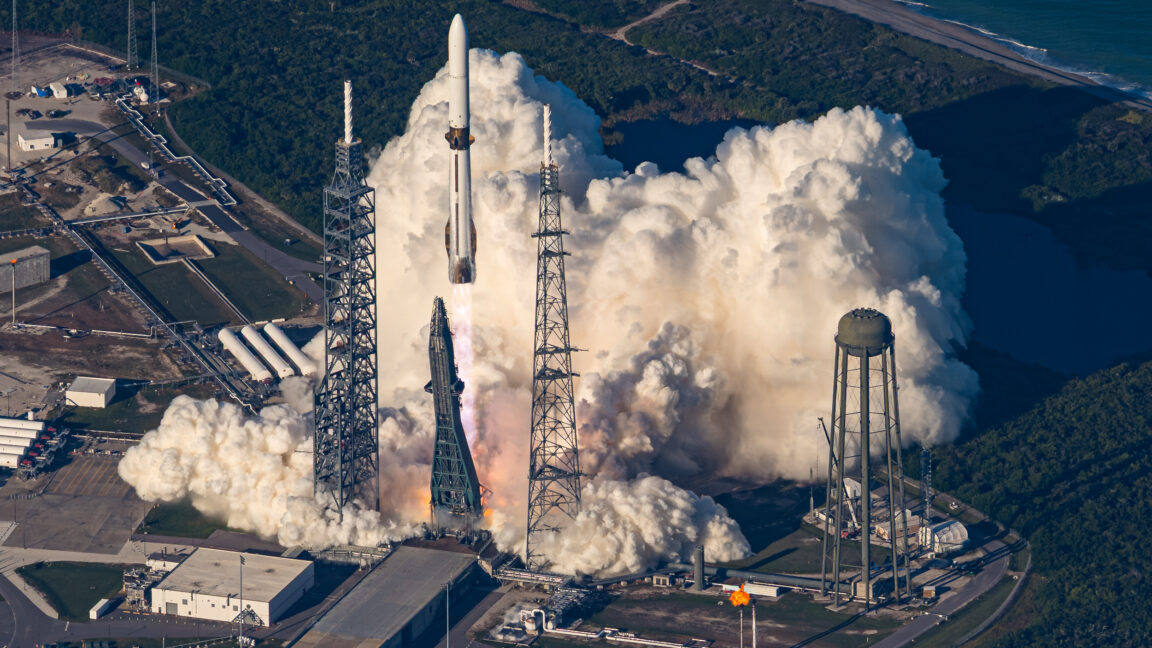
Rebuilding the company’s pad, or finishing a new one, will likely take at least a year, even with a major effort by Blue Origin, and drawing upon Jeff Bezos’ nearly infinite resources. One source familiar with pad rebuilds estimated that 15 months was a “best case” scenario.
You might wonder what the big deal is. SpaceX has been blowing up Starship rockets left and right, and the space nerds seem to be cheering them on.
The reality is that Blue Origin took a more traditional design route with New Glenn, as opposed to SpaceX’s iterative design, which seeks to test, fly, fail, and fix hardware. The New Glenn first stage had performed nearly flawlessly during its first three flights. It is a mature design.
Because of this, Blue Origin had reached the point where it was poised to begin near-monthly launches of the vehicle during the second half of the year, serving a variety of customers, from NASA to Amazon, AST SpaceMobile, and its own internal payloads.
With the Vulcan rocket also currently offline due to an anomaly, it once again places all of the US medium- and heavy-lift launch capacity in SpaceX’s basket, with its Falcon 9 and Falcon Heavy rockets.
Speaking of Vulcan, if this is a problem with the BE-4 engine—and early indications are that the anomaly leading to Thursday night’s failure originated in the central engine of the booster—it would further compound United Launch Alliance’s difficulties in getting the large rocket back into service.
Could Blue Moon Mark 1 launch on other rockets? SpaceX’s Falcon Heavy and United Launch Alliance’s Vulcan vehicles both likely have the lift capacity to push the vehicle to the Moon. But Vulcan is also sidelined at present and has a long line of Space Force payloads in the queue. So what of Falcon Heavy?
The Mark 1 lander is powered by the BE-7 engine, which runs on liquid hydrogen and liquid oxygen. There may be compatibility issues related to the Falcon rocket’s kerosene-powered upper stage, although this has not been confirmed. Also, it is unlikely that Blue Origin would partner with a direct rival, SpaceX, in this manner.
Due to the Mark 1 issues outlined above, there will either be significant delays to, or the need to restructure the early phases of, the Moon Base program. The lunar rovers under development by Astrolab and Lunar Outpost, for example, have a mass of about 1 ton. Only Mark 1 and SpaceX’s Starship have that kind of delivery capacity.
There are also major implications for the main Artemis crewed missions.
NASA recently changed Artemis III to become a mission that will see the Orion spacecraft rendezvous with one or both of the Human Landing Systems under development by Blue Origin (Blue Moon) and SpaceX (Starship) in low-Earth orbit. NASA appears determined to launch this mission in 2027 and plans to announce its four crew members in a couple of weeks.
But it’s now all but certain that a Blue Moon lander will not be ready for such a mission within the next 18 months. NASA will need to decide whether to wait on Blue Origin or press ahead solely with a Starship mission.
As for Artemis IV, the lunar landing mission, this failure further complicates that plan. It is difficult to imagine a scenario in which a crew-rated Blue Moon lander is ready at any point in 2028 now. Even if the hardware is far along, Blue Origin still needs to fly test missions with Blue Moon Mark 1, which are on hold indefinitely.
A number of senior NASA officials had come to view Blue Origin’s plan to use a slimmed down version of the Mark 2 lander, which would not require in-space refueling, as the prime option for Artemis IV. Now, like much of the US space industry, NASA finds itself highly dependent on SpaceX’s ability to deliver with Starship.
Note: This article has been edited to clarify interoperability issues between the Blue Moon Mark 1 lander and the Falcon Heavy rocket.