
Development
Mystery GPS jammer in Iran becomes test for NASA satellites’ capabilities
May 28, 2026 Development Source: Ars Technica
Share this article



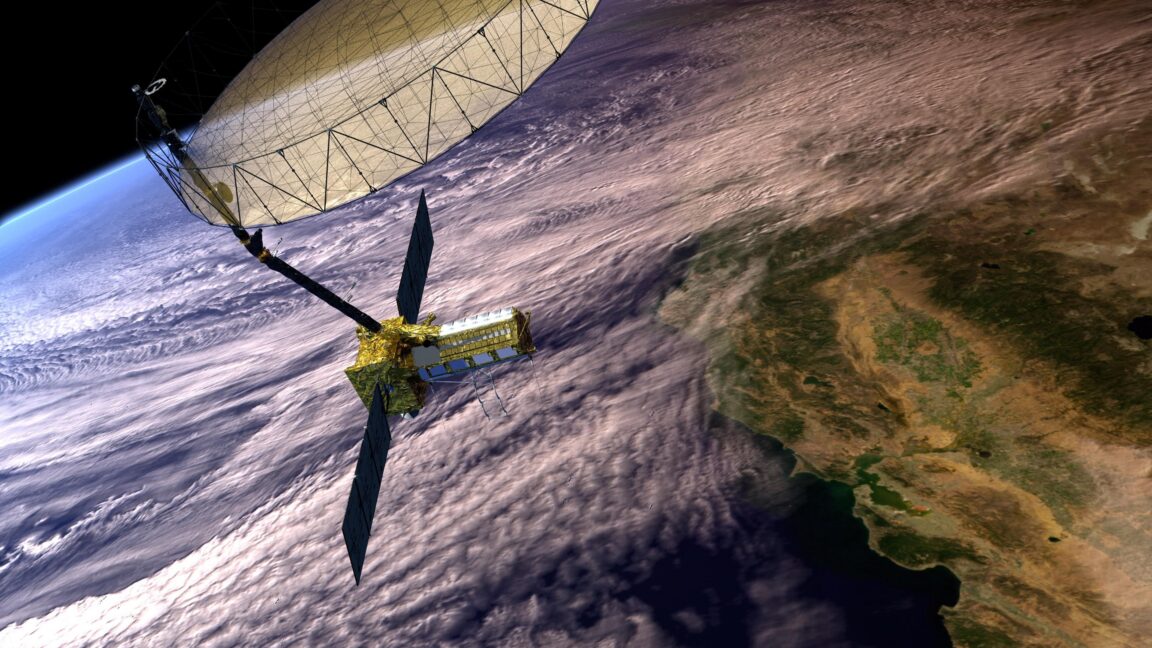
To validate the NASA satellite systems’ performances using a known jammer location, Gorman and colleagues first used “independent signals intelligence” to identify and locate a GPS jammer operating near the city of Shiraz in Iran. This mystery jammer has been active since the start of 2026 and has continued operating at even higher power since the war began with the US and Israel attacking Iran on February 28, 2026.
The researchers then ran a controlled experiment that looked at the NASA satellite data during two “jammer on” dates from January 8 and January 20, 2026, along with two “jammer off” dates from December 15 and December 27, 2025. They applied several detection and signal analysis techniques to both the CYGNSS and NISAR data in order to come up with the best approximations for the GPS jammer’s location.
The experiment showed that CYGNSS located the jammer within 4.33 kilometers of the ground truth, with a circular error probable of 3.48 kilometers. The latter means 50 percent of the estimates from repeated analyses on many similar jammers would fall within 3.48 kilometers.
By comparison, NISAR located the jammer to within 6.26 kilometers of the ground truth while demonstrating a circular error probable of 6.88 kilometers. So CYGNSS came out on top.
The demonstration built on earlier research by Chew and colleagues that used CYGNSS data to map regions rife with GPS interference and identify possible jamming sources. “My work didn’t try to geolocate jammers like Gorman’s does—I was simply gridding the noise variable to 9 km and associating ‘hot spots’ with known conflict areas around the world,” Chew explained.
Such NASA satellites cannot provide “near-realtime monitoring of GPS jammers” because it can take up to several days for collected data to become publicly available, Chew said. She would be “surprised” if this could deliver very precise geolocation of jammers, but still expressed interest in seeing such methods repeated on other known jammers to measure how consistently they can get within five kilometers of actual locations.
Harnessing this capability from NASA satellite data could allow researchers to better filter out interference from GPS jammers that may impact NASA science missions, Chew said. But she also highlighted the potential usefulness for supporting aviation and maritime navigation warnings, along with aiding open source intelligence investigators who track GPS interference across the world.
Navigation interference resulting from GPS jamming has spread well beyond major conflict zones in Ukraine and the Middle East to impact shipping in the Baltic Sea and Mediterranean, along with maritime traffic in the South China Sea. About 900 flights experience GPS disruptions daily, with degraded GPS service affecting a dozen or so transatlantic flights. Given this unwelcome trend, there is growing interest in a wide variety of GPS alternatives.
When the US military launched Operation Epic Fury against Iran, more than 1,100 ships experienced GPS interference across the Persian Gulf between February 28 and March 1, 2026. Much of the contested Strait of Hormuz is still experiencing GPS jamming and spoofing, with the latter involving false signals that trick GPS receivers into reporting inaccurate positions.
Meanwhile, NASA’s CYGNSS satellite data shows the mystery jammer is operating at “dramatically higher power” with a fivefold increase in signal intensity since the start of the Middle East conflict. Possible explanations include the jammer operator increasing power output to ward off potential US or Israeli military strikes using GPS-guided weapons, more jammers becoming active in the area, or a shift from intermittent to continuous operations, Gorman said. In any case, the NASA satellites’ passive, persistent monitoring capabilities may serve well in letting us know what happens next.