Development
California defeats Tesla's attempt to throw out racial discrimination lawsuit
May 28, 2026 Development Source: Ars Technica
Share this article



The CRD alleged that “Black workers were relegated to labor-intensive jobs, segregated, and paid less than non-Black workers,” and “faced retaliation in the form of overly harsh performance reviews, reprimands, and termination” when they complained. The agency accused Tesla of failing to stop the racial harassment and discrimination despite knowing about the problem.
Superior Court Judge Peter Borkon said in yesterday’s ruling that at this stage of the proceeding, “the court views the evidence in the light most favorable to the plaintiff and resolves any evidentiary doubts or ambiguities in their favor.” Tesla, the defendant, is seeking a motion for summary judgment and, as such, must submit undisputed facts that are sufficient to defeat the claims.
The allegations include racial harassment, discriminatory assignments, pay inequality, retaliation, failure to prevent discrimination and harassment, and unequal treatment in areas including discipline, promotions, firings, and constructive discharges. Borkon denied Tesla’s attempt to throw out the claims, saying the carmaker did not submit undisputed evidence that would shift the burden of proof to the CRD.
Borkon’s analysis was most extensive on the claims of harassment, discriminatory assignments, and retaliation. On harassment, he wrote:
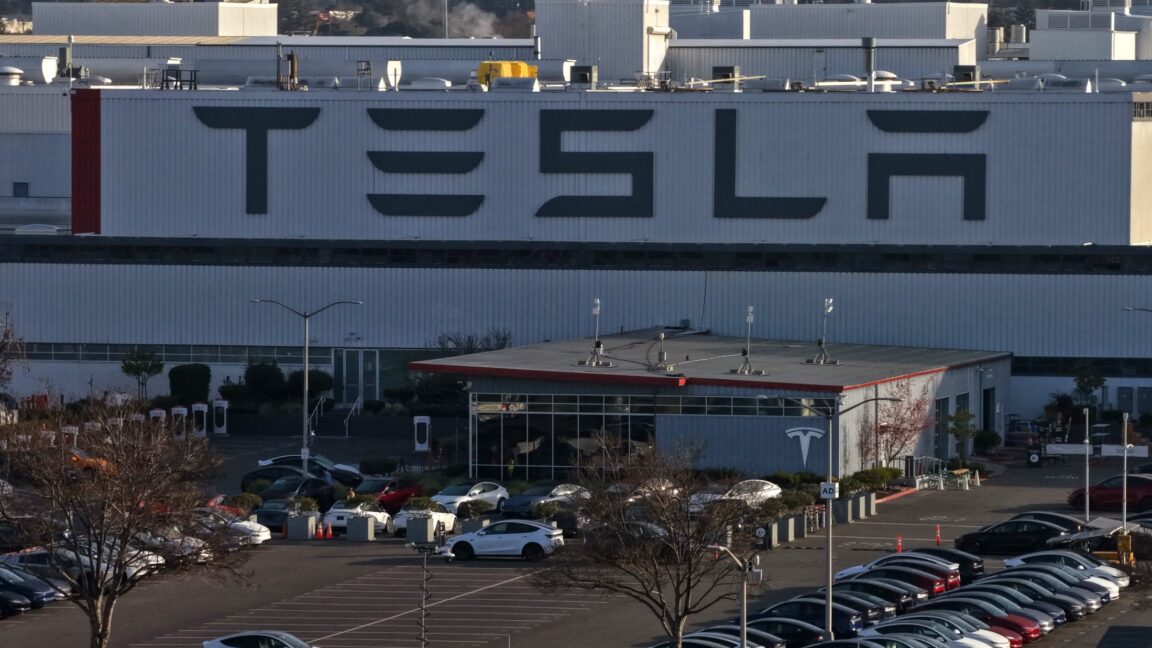
The evidence indicates that “Of the 240 declarations submitted by plaintiffs, all stated that they heard the n-word at the Tesla Fremont factory” and “Of the 228 declarations submitted by Tesla, 99 heard the n-word at the Tesla Fremont factory.” That suggests that out of 12,000 Black workers at least 339 (2.8%) heard the n-word at work. Tesla’s evidence did not shift the burden to plaintiff CRD. First, CRD’s claims alleges harassment state-wide but Tesla’s evidence appears to be limited to the Fremont factory. Second, Tesla’s evidence appears to be a non-representative sample from the Tesla factory, so it cannot reasonably be extrapolated to the whole Tesla factory. Third, Tesla’s evidence defines the minimum number of Black workers who heard the n-word at work rather than the total number of Black workers who heard the n-word at work.
According to Borkon’s ruling, Tesla asserted that its written policies and procedures and its training and orientation programs show there was no pattern or practice of harassment, and that Tesla took immediate and appropriate action in response to incidents of harassment. Borkon said he “is not persuaded that the existence of written policies alone is sufficient to establish a prima facie showing that there was no harassment or discrimination.”
The CRD told the court that “numerous Vaughn declarants set forth that they were subjected to adverse employment actions following reports of harassment or discrimination.” According to Borkon’s ruling, “Tesla did not present evidence that it had legitimate non-discriminatory business reasons for the allegedly retaliatory employment decisions.”
We contacted Tesla today and will update this article if it responds.
The Vaughn v. Tesla case is also moving ahead at Alameda County Superior Court, with the trial currently scheduled for June 1. The case originally involved a certified class of 6,000 Black workers, but the class was decertified last year when Borkon ruled that it “could not move forward as a class action because many of the 200 workers chosen at random to testify ahead of a trial scheduled for 2026 were unwilling to do so,” Reuters reported at the time.
In another racial discrimination case against Tesla, former factory worker Owen Diaz won a $15 million judgment, which he rejected. He was awarded $3.2 million after a new trial and then settled with Tesla.
The US Equal Employment Opportunity Commission (EEOC) sued Tesla over similar discrimination claims during the Biden administration. The case is still pending and moving through discovery.