Development
I spent years forcing myself to finish The Witcher 3—don't repeat my mistake
May 25, 2026 Development Source: Ars Technica
Share this article



Filling out that blank character sheet with a vision for the identity I wanted to inhabit was by far my favorite step when I played D&D, GURPs, Traveller, Shadowrun, and other tabletop RPGs when I was younger.
To me, the overriding point of a role-playing game is defining your role and inhabiting it. It’s creating my own alter ego to meet a certain fantasy, and seeing where inhabiting it takes me.
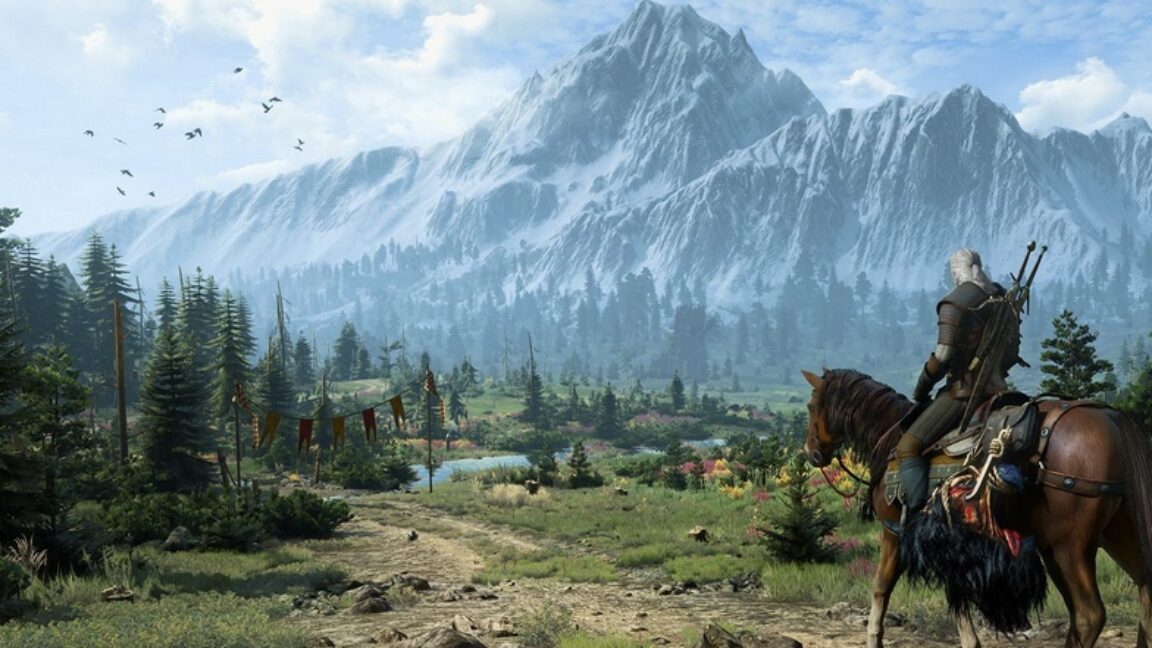
The Witcher 3 puts you in the shoes of Geralt of Rivia, a man with decades of history, the subject of multiple games, books, and a TV show. Geralt is as well-defined as they come, and while you get to make some choices for him, they still reflect the core of who that man is.
It’s genuinely impressive that The Witcher 3‘s writers managed to give the player meaningful choices within this framework. Each branching dialogue choice taps into different aspects of and conflicts within Geralt’s personality and values—the writing in The Witcher 3 is far above par, I’ll give it that. But ultimately, it’s just Geralt from different perspectives, not an identity formed by the player.
Some open-world RPGs take one path here, and some take the other. It’s OK to only like one of them, regardless of what others may value.
Geralt is, frankly put, a total badass. The man has been training for his entire life to face off against the most terrifying monsters put him in a different class from most people.
Part of the appeal of The Witcher 3 is in being that badass. I understand that appeal very well. But you know where this is going: it’s not what I’m looking for from my RPGs.
I enjoy the transition from nobody to somebody, from novice to master.
The Witcher 3 gives you ways to specialize Geralt, strengthening powers and abilities he already has, but he is most definitely not starting from zero. It’s not just because The Witcher 3 is a sequel, either. The game’s designers are intentional about making sure you feel the power fantasy in full force from the very beginning.
So again, we have an example of a variation within a genre. To outsiders, Elden Ring (another favorite game of mine) and The Witcher 3 might look similar—grimdark open-world roleplaying games with melee combat, right? But one has you going from zero to hero, and the other has you going from hero to even more heroic hero.
Are you someone who likes The Witcher 3? Good for you! I’m glad. And if you haven’t played it but you read this and said to yourself, “Actually, I prefer the power fantasy and the authored character,” that clearly bodes well for your potential enjoyment of the game.
You can nab it on GOG and other storefronts. In fact, it’s 80 percent off on GOG right now (so it’s $7.99). That’s a good deal for 100-plus hours of entertainment.
Unlike some older games we discuss in this series, there’s no need to install a bunch of community patches to get it running on this system. Plus, it’s been well-maintained by its developers; it got a major free update with new features like ray-tracing just a couple years ago.
Give it a shot, and if you like it more than I did, I’ll be glad to hear it—just don’t tell me it’s baffling that I’m not into it!
First, a quick apology: It’s been almost two months since the last entry in this ostensibly monthly series. For those who’ve been following the series closely, the Ars staff is sorry for the long gap! This series is dessert for us, not the main course; we love doing it, and we get to it when we can, but when things in the wider tech world get busy, it can sometimes end up on the back burner. We’re still committed to keeping it going, though—hopefully at a more consistent pace.
That brings me to a question, though. Generally, these posts have centered on PC-focused games from the 90s, but we’ve had a couple of examples of somewhat more recent games—The Witcher 3 and Dishonored both came out in the past 15 years.
For those following along at home: are you interested in slightly newer games like that, or would you prefer the series mostly stick to that bygone golden age of shareware floppies, Voodoo cards, and big boxes at Software Etc? If you have an opinion, let us know!