
Development
US scrambles to stop Internet users re-creating dead pilots’ voices
May 23, 2026 Development Source: Ars Technica
Share this article



Pilots’ voices from the last seconds of a fatal cargo plane crash have been re-created by Internet sleuths using software and AI tools. The spread of reconstructed audio recordings has prompted a US government agency to suspend all public access to its database of civil transportation accidents—because federal law prohibits investigators from publicly releasing audio from cockpit voice recorders.
The US National Transportation Safety Board (NTSB) usually shares factual reports and evidence gathered from investigations of aircraft crashes and other civil transportation incidents. But on May 21, the NTSB announced that the online docket system containing such information was “temporarily unavailable” as it reviewed the publicly available materials that had enabled people to re-create cockpit audio recordings from aircraft disasters.
“The NTSB is aware that advances in image recognition and computational methods have enabled individuals to reconstruct approximations of cockpit voice recorder audio from sound spectrum imagery released as part of NTSB investigations, including the ongoing investigation of the crash last year of UPS flight 2976 in Louisville, Kentucky,” according to an NTSB statement. “The NTSB does not release cockpit audio recordings.”
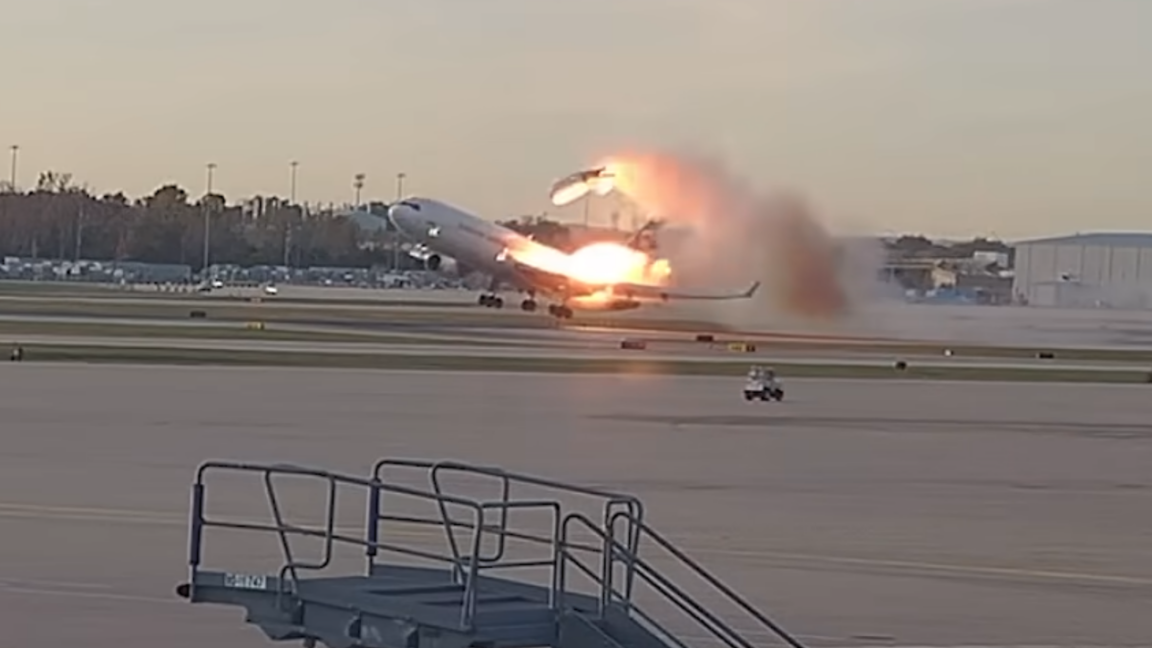
UPS flight 2976 was a United Parcel Service MD-11F cargo aircraft that crashed shortly after takeoff from Louisville, Kentucky, on November 4, 2025, following a structural failure that led to an engine physically detaching as the aircraft left the ground. The three pilots aboard the aircraft, including a relief pilot, were killed. Another 12 people on the ground were killed, with 23 people being injured.
The US Congress enacted a federal law in 1990 prohibiting the NTSB from publicly sharing any part of a cockpit voice or video recorder to protect the privacy of air crews. That law followed airline pilots’ pushback over the controversial TV station airing of a cockpit conversation relating to the August 1988 crash of Delta Air Lines Flight 1141 at Dallas-Fort Worth International Airport.
“It’s been an important factor for decades in having airline pilots be willing to have their voices recorded at their normal workplace, day in and day out, with the threat of being killed during their workday,” Ben Berman, an accident investigator and analyst who previously worked for the NTSB and flew a Boeing 737 for United Airlines, told Ars. “People are horrified with the idea of their last moments being made public and used for anything other than accident investigation, which is why the federal law supports that.”
As a result, the NTSB takes multiple precautions for securing cockpit voice recorders during investigations of civil aviation incidents. Robert Sumwalt, former chairman of NTSB, has described how the federal agency restricts listening access to a handful of people who must first sign a log and nondisclosure agreement, with cellphones being left outside and handwritten notes being destroyed afterward. Transcription of the audio is done manually through constant replays and group discussions.
The NTSB released written transcripts of the cockpit audio recordings from the crash of UPS flight 2976 during a two-day investigative hearing held on May 19 and May 20. But the agency also publicly shared a PDF with a spectrogram—a visual representation of sound signals—showing the last 30 seconds of cockpit audio recording.
That spectrogram apparently enabled a number of individuals to reconstruct audio versions of the pilots’ voices and other sounds from the cockpit voice recording, with examples appearing on social media sites such as X and Reddit. The spectrogram itself has also been posted and distributed across social media.
Such audio re-creations frequently rely on the Griffin-Lim algorithm that was originally published in a 1984 paper by Daniel Griffin and Jae Lim. Updated versions of the method have since been incorporated into speech processing algorithms and implemented through programming languages such as Python. Various Python implementations of the algorithm are available on GitHub.