
Development
Rocket Report: Starship launch delayed, German launch company may aid Canada
May 22, 2026 Development Source: Ars Technica
Share this article



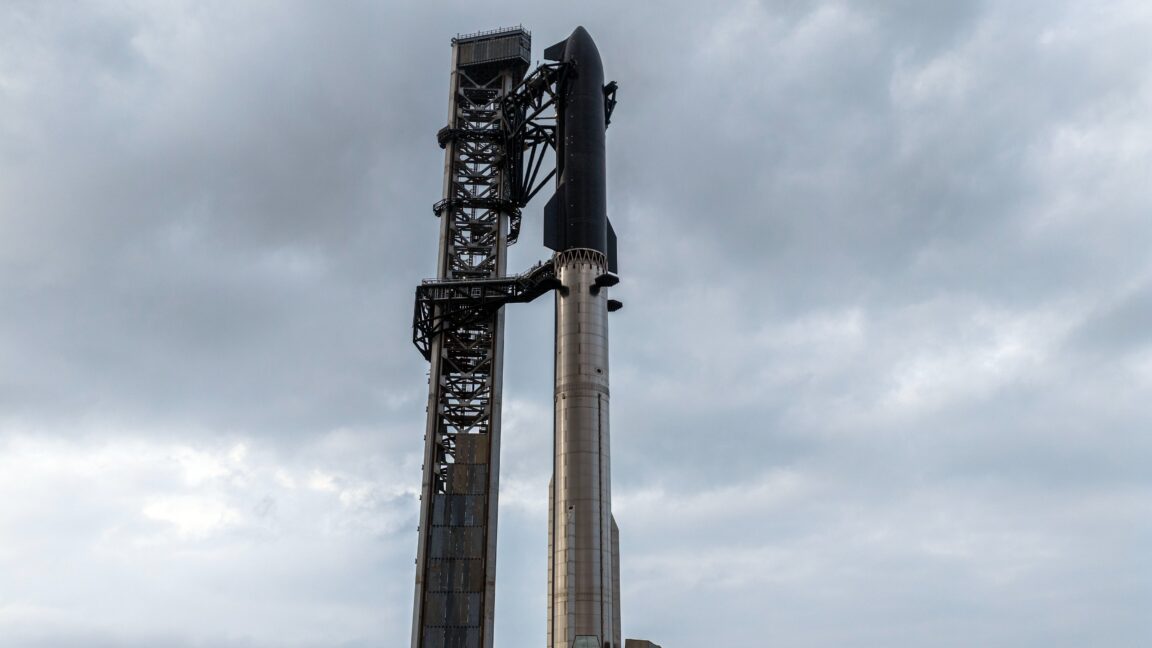
Welcome to Edition 8.42 of the Rocket Report! SpaceX nearly launched its Starship rocket on Thursday amid much pomp and circumstance in South Texas, only to be foiled by a ground system issue. Such delays are to be expected, with almost entirely new hardware on both the rocket and the ground side of things. The company will try again as soon as Friday evening, and as we discuss in this week’s report, the stakes are quite high for SpaceX and much of the rest of the US spaceflight enterprise.
As always, we welcome reader submissions, and if you don’t want to miss an issue, please subscribe using the box below (the form will not appear on AMP-enabled versions of the site). Each report will include information on small-, medium-, and heavy-lift rockets as well as a quick look ahead at the next three launches on the calendar.
Isar may assist Canadian launch firms. European Spaceflight attempts to make sense of news this week that a German submarine company has partnered with a German launch company, Isar Aerospace, to sell 12 new submarines to Canada. Confused yet? The German maritime defense company TKMS is competing with South Korea’s Hanwha Ocean for the submarine contract, and final bids were due in March. Beyond finances, the competitors are looking for ways to sweeten their proposals. After submitting its bid, TKMS said it had partnered with German launch services provider Isar Aerospace to help establish sovereign Canadian access to space.
Isar probably will help, rather than compete … In recent months Canada has gotten serious about developing its own sovereign access to space. As part of its Launch the North initiative, Canada will invest $105 million over three years to establish a small-lift launch capability by the end of 2028. The initial awards included $8.3 million for Reaction Dynamics, the Canada Rocket Company, and NordSpace. The submarine proposal appears to be not an effort to supplant those three companies, but rather envisions Isar’s role as an industrial and technical enabler of the Canadian efforts.
A fix to be attempted … That was true, at least, until the countdown clock paused 40 seconds before liftoff. The launch team repeatedly attempted to resume the countdown, only for the computer controlling the launch sequence to stop the clock again. There were five holds in all before SpaceX called off the launch attempt. Elon Musk, SpaceX’s founder and CEO, attributed the scrub to a hydraulic pin that failed to retract on an umbilical arm connecting the launch tower to the rocket. “If that can be fixed tonight, there will be another launch attempt tomorrow,” Musk wrote on X. The 90-minute launch window Friday would open at 5:30 pm CDT (22:30 UTC).
There is a lot on the line with this test flight of Starship. After seven months of down time, SpaceX returned its Starship vehicle to the launch pad. Only this time it’s a new rocket, V3 of the Starship upper stage and Super Heavy booster, and a new launch pad at its Starbase facility in South Texas. SpaceX’s goal with the test flight is to gather data about the performance of the radically remade new vehicle and its launch pad. For all that this is a test flight, however, in a preview of the launch, Ars reports that there is a lot on the line for SpaceX, NASA, and much of the US commercial space industry.
Time for Starship to fulfill its promises … The US commercial space industry is depending on lower launch costs and higher capacity. NASA’s lunar ambitions with the Artemis program, to a great degree, hinge on its success. And the stakes are highest of all for SpaceX. Starlink direct-to-cell? Orbital data centers? SpaceX’s fantastic valuation after its IPO? An eventual city on Mars? All of these rely entirely on Starship fulfilling its promise of rapid, low-cost, reusable launch.
ULA confirms solid rocket test success. United Launch Alliance oversaw the completion of a critical milestone last month on the road to resuming flights with its Vulcan rockets, Spaceflight Now reports. The company said Northrop Grumman performed a successful static fire test of a Graphite Epoxy Motor 63XL Solid Rocket Booster. A Northrop spokesperson said the test served to “demonstrate nozzle design enhancements which were already in work and an advanced propellant technology for future solid rocket motors across their portfolio.”
A review process is ongoing … During the launch of a mission for the United States Space Force in February, dubbed USSF-87, one of the four SRBs attached to the Vulcan booster suffered a nozzle problem prior to SRB separation. The rocket rolled more than intended following the incident. The tests are part of a review process underway by the US military to allow the rocket to return to flight for its missions. Vulcan’s next flight is expected to be for a commercial customer, Amazon, sometime this summer.
Contractor dies at Starbase. A person at SpaceX’s rocket complex in Texas died in a workplace accident Friday, The Wall Street Journal reports. Cameron County Sheriff Manuel Treviño said that his office responded to the accident but isn’t releasing information about the victim. The person worked for a contractor helping to develop the company’s Starbase complex and died after a fall, people familiar with the matter said.
Starbase has its own emergency plan … The fire department for Brownsville was dispatched to respond to the accident on Friday, said the city’s fire chief, Jarrett Sheldon. That request was quickly canceled, and the department didn’t send personnel out to Starbase, he said. SpaceX didn’t respond to requests for comment. Representatives for the city of Starbase, created as a company town for SpaceX’s facilities and staff, also didn’t respond to requests for comment. Representatives from the Occupational Safety and Health Administration didn’t respond to requests for comment.
May 22: Starship | Flight Test 12 | Starbase, Texas | 22:30 UTC
May 24: Falcon 9 | Starlink 17-37 | Vandenberg Space Force Base, California | 14:00 UTC
May 24: Long March 2F | Shenzhou 23 | Jiuquan Satellite Launch Center, China | 15:08 UTC